Blog
568 Entries

Check back here for detailed information on updates to the reading orders or database, reviews by myself or any of the other site contributors, and general comic news we find interesting! You can also subscribe to an RSS feed for updates.

If you’re new here, you may want to know How To Use This Website. Alternatively, click on a reading order on the sidebar. The current pride of our site is the Recommended Reading Order for the entire DC Universe!

Page 20 of 115« First...10...1819202122...30405060...Last »
Up Down
Page 20 of 115« First...10...1819202122...30405060...Last »
By | Friday, December 17, 2010 | 11:59 pm | 156 Comments | Blog > Giveaways

Update: This giveaway is now over and winners will be contacted.

Update 2: The winners have been announced!

Here’s the weekly giveaway!

Hey, it’s Christmas this week! And nothing says Christmas like a post-earthquake Gotham City hellhole.

So I’m giving away the critically acclaimed Batman: No Man’s Land Vol. 1 through Vol. 5 to one lucky yuletime kid.

Don’t worry, you don’t have to be a kid to enter. (I’m not.)
Nor do you have to celebrate Christmas. (I’m Jewish.)

You just have to want it bad enough.
(And leave a comment and be randomly chosen.)

But if you don’t get chosen, don’t cry yet. I’ve also got four copies of
Ghost Rider / Wolverine / Punisher: Hearts Of Darkness
(which we previously reviewed.)

So four runners-up will each get a copy of that 90s gem. Or, if you hate Batman or something, you can choose to get the Marvel book instead.

Are you excited? I’m excited. It’s a big stack of comics.
And nothing goes with eggnog like Batman.

(Or, if you’re Jewish, nothing goes with cold morning Chinese leftovers like Ghost Rider.)

The Rundown:

(1) Main Prize: Set of Batman trades: Batman: No Man’s Land Vol. 1, Vol. 2, Vol. 3, Vol. 4, and Vol. 5. Over 1000 pages of comics including some hard to find out of print volumes.

(4) Runners Up: Ghost Rider / Wolverine / Punisher: Hearts Of Darkness Original Graphic Novel

(5) Winners: One primary, and four secondary, randomly selected from the comments on this post.

Eligibility: You must be registered and logged in when you comment to be eligible. You must also be in the continental USA for shipping purposes. If you are overseas and want to pay for the shipping yourself, feel free to enter, but keep in mind that it will probably be more expensive than just buying the book.

Deadline: You have until 11:59 on Christmas Eve, Friday, December 24th, 2010. The winners will be contacted soon after.

Good luck everyone!

You can see the previous giveaways and results here.

Want to stay up to date? Click here to subscribe to updates by RSS!
You can also sign up to get updates by Email!
By | Friday, December 17, 2010 | 11:44 pm | 5 Comments | Blog > Reviews
Find This Book At:
Amazon (Softcover)
Half.com (Softcover)
Ebay (Search by Title)
Ebay (ISBN/Softcover)
View our database entry
Includes Issues:Doc Savage 1-8
Issue Dates:October 1972 – January 1974
Creators:
, , , , , , , , , , , , , , , , , , , ,

This review is spoiler free! Skip To The Verdict? »

The original superhero.

It’s a weighty claim.

While Doc Savage: The Man of Bronze is missing some features that historians might argue would make him a full fledged superhero, he certainly was one of the earliest and most influential science adventurers.

The absolute first superhero might be Nyctalope, who debuted in french pulps in 1911. But not many have heard of that guy.

Likewise, the masked comic adventure The Clock, from 1936, isn’t particularly memorable.

Those that are interested in the intricacies can lose a few hours in the Superhero fiction article at wikipedia.

As for the Man of Bronze, he’s one of these primordial characters to have moved past the Golden Age of pulps and comics.

Originally appearing in a Doc Savage Magazine run that started in 1933, the pulp literature character was introduced as a “peak” human. Trained from birth by a team of scientists and experts in every field, Clark Savage Jr.’s intense daily exercise regime and supreme intellect keep him at the top of his game as the perfect adventurer.

Along with five other rough and tumbling experts that he met during World War I, Doc Savage travels the world, using his ingenious inventions to solve mysteries, right wrongdoings, and aid the oppressed and needy.

Doc was created by Lester Dent, who under various pen names (such as Kenneth Robeson) wrote some 181 Savage stories.

He’s seen many homages, including notable ones in Warren Ellis’ Planetary and the Alan Moore’s Tom Strong, and is still in print himself, having been included directly in DC’s 2010 First Wave title.

Also published by DC this year is Doc Savage: The Man of Bronze, which actually collects a Marvel comic that ran in the early 70s.

This Bronze Age title, in turn, reworked some of Lester Dent‘s earliest stories from 1933 and 1934.

There are four stories here, The Man Of Bronze, Death in Silver, The Monsters, and Brand of the Werewolf, each taking place across two issues.

The first couple stories are adapted by Roy Thomas and Steve Englehart with Gardner Fox and Tony Isabella handling the latter two. Ross Andru does the majority of the pencils along with help by Richard Buckler.

There’s a good smattering of talent here and don’t let the mix scare you. This book is very consistent, with no jarring differences between writers and artists, delivering a fun adventure story in a mix of the original pulps and Kirby influenced Marvel house style.

When I first sat down with the book, the comic historian in me was very excited by the Savage name. The Jim Steranko cover didn’t hurt either.

I have to admit that the first few pages were kind of jarring. Instead of a nice historical introduction, there’s a bit introducing the cast. While not badly written, sometimes such pages are a hint that the book you’re opening is overburdened by continuity.

Also, the character design for Savage is really weird – perhaps accurate to the magazines, though I’ve seen some much more human looking versions – but he looks like a cross between a manhunter robot and a genie addicted to tanning beds.

Luckily, Savage grew on me, and I needn’t have worried about the continuity. While the story seems to jump right into the action (with some very Bronze Age Marvel villain designs) it works perfectly like that. I think the book actually opens with an adaptation of the very first pulp story, so it must have worked like this right from the start.

You needn’t know much more about the characters than Doc’s mastery of just about everything and kind nature, Monk’s gorilla type frame holding the brain of a genius chemist, or Ham’s role as a well dressed lawyer with a sword hidden in his cane. They’re adventurers and you get to know them by watching what they do best – adventure!

I was surprised by how much I enjoyed this book. I expected it to be interesting and fun on a level similar to many older comics, getting by mainly on a sense of fauxstalgia (nostalgia for events and styles that were popular before you were born).

But while many of the plots are similar to stories I’ve read before in Golden and even Modern Age comics (probably because these Savage stories were influential), I was also kept constantly on my toes.

As an example, Batman aficionados might want to read The Monsters, which was originally published in April 1943 and was probably quite influential on the 1940 Batman storyline about Hugo Strange. I’d have a hard time believing that Kane and Finger were not familiar with Lester’s work, not that there’s any stealing – just some fun parallels.

Creators like Gardner Fox, who were around for both stories, must have been particularly excited about this project. In fact, I’m willing to bet most of the artists and writers treated this one as revisiting a childhood treasure.

Without having read the original shorts, I feel like the adaptation is faithful. Elements like slightly offensive ethnic stereotypes are still there, but alongside the good factors as well – strong female characters, for example. The dialogue is modern enough while still retaining a very pulp feel.

There’s a no-apologies craziness about the whole series of events, rather explaining afterwords than ruining a surprise with unneeded build up.

Characters constantly display new skills, which some how makes sense while remaining unexpected. We know these guys are badass and part of the fun is them topping past feats.

Just as surprising and perhaps a little confusing, is the use of gadgetry. It seems (and the art style might be a factor here) to be much too advanced for the 30s, when these stories supposedly take place. But interestingly enough, many of the inventions (like television, advanced submarines and helicopters, rapid-fire firearms) were featured in the original stories.

Never underestimate a speculative fiction author.

Ross Andru illustrated this book right at what many would consider the height of his career.

He had just come to Marvel from DC Comics and was working the newly launched Defenders and Marvel Team-Up, soon working as the regular artist on Amazing Spider-Man. Only a few years later he would co-create The Punisher.

His work here isn’t quite as memorable as some of those other issues (and the design for Doc Savage isn’t nearly as aesthetically sleek as The Punisher and his overly broad build can see quite awkward at times) but it’s still great for the book.

It’s worth talking a little bit more about how terribly ridiculous Doc looks here. Little blue vest?

And in the last issue, a little blue furry vest? And that spray tan and widow’s peak?

Not at all the Doc I always thought of from the covers of pulp paperbacks, but by the end I couldn’t help loving it, at least with a healthy dose of hipster-like irony.

I’ll admit that Andru isn’t my favorite artist of this era, as I always felt his work was stuck partway between the angular intensity of Jack Kirby and the sleek musculature of artists like Neal Adams.

There were some times where I was reminded of Kirby more directly, mostly with the Fabulous Five that assist Savage – for some reason always conjuring memories of the Newsboy Legion and other early Kirby creations. Especially the broad face and meaty hands of Monk.

Andru was an admirable craftsman, though, and his compositions flow with the action, keeping the story moving at a thrilling pace.

While Savage himself feels a bit too smooth at times, seeming less than human, many of the other characters have striking features.

It’s especially obvious when Andru plays with the light in a scene, creating dramatic and sometimes terrible effects.

I think his best work is in The Monster Men and the first issue of Brand of The Werewolf, where the more monstrous adversaries allow him to really let loose.

I’m not sure why the reigns had been handed to Rich Buckler for the last issue.

Perhaps because Andru was working on three issues of Spider-Man, two of X-Men, and a Marvel-Team up from October to December of 1973, so he may have just been busy.

In any case, Buckler, along with Tom Palmer, who inked most of the work, and Jack Abel do a fine job with the last issue. I didn’t even notice the switchover on the first readthrough, since I was ambling along with my full attention on the action. The art here has perhaps a little bit more hatching instead of smooth lines, but it’s not particularly evident.

Altogether, Doc Savage: The Man Of Bronze was a big bundle of fun.

I didn’t have high hopes, since you never know what to expect with a book that’s been uncollected for so long.

I wish there was a bit of a historical introduction in this volume, but I understand the more direct presentation since it’s a set of stories that can appeal to all ages of readers hoping for some quick hopping adventure.

Forty years past his creation, then another forty  past the adaptation, Doc Savage still stands strong.

The Man of Bronze can brave danger with the best of em.

Verdict:
4 out of 5.

Both an excellent introduction to a classic pulp hero and some fun comics that stand up to the test of time, Doc Savage: The Man Of Bronze comes highly recommended.

Pick it up for the kid inside, the kid you know, or the culture historian pretending to be past childish things.

Essential Continuity:
Doc Savage doesn’t have a very large publishing history in comics, and his origin isn’t really as important as his adventures.

I’m actually not sure if the origin story is ever told as more than a couple blurbs or mentions. But this is a good place to start.

Read first:
For the comics reader, you can start here. We also place it very early on our DC timeline. It’s in the 30s, right after Showcase Presents Enemy Ace, taking place in WWI.

But if you are interested in the original pulps many of them (along with a lot of scholarly publication) are available on Amazon.

I’m not an expert on all the various print runs, comics being more my thing, but it seems a lot has been collected past the original magazine format.

Read next:
As far as trades go, Doc next shows up in Doc Savage: The Silver Pyramid, which collects the late 80s DC miniseries.

There are also some contemporary trades (probably why DC published this one), Doc Savage: The Lord of Lightning and First Wave.

I haven’t read any of these others yet, so I can’t guarantee they will be as high quality as this book.

I personally reccomend Planetary and Tom Strong, as mentioned before in this review. Both have some examination of this kind of science adventurer, in addition to being good reads.

This book also got me in the mood for some classic Kirby art action, and I might jump into the recent Newsboy Legion hardcover if I can find the time.

Finally, if you’re following along on our review journey through the DC Universe Recommended Reading Order, our next book is Sandman Mystery Theatre Vol. 1: The Tarantula.

« Back to the top?

Join the forum discussion on this post
Want to stay up to date? Click here to subscribe to updates by RSS!
You can also sign up to get updates by Email!
By | Friday, December 17, 2010 | 5:35 am | 19 Comments | Blog > Giveaways

I’m periodically on the look out for ways to thank people who have helped with the site.

I’ve given a few gift cards in the past (and will in the future, though cash is sadly low right now) but I like to send out books that I think will interest people.

Monday I’ll be sending a Batman: Under The Hood volume to Alex as a little thank you for his Uncle Gorby’s Corner of Free Stuff features.

For the rest of you, the Justice League International: The Secret Gospel of Maxwell Lord giveaway is ending tonight, so make sure you comment if you’re interested in that book!

Next week is Christmas, which is a pretty big deal to some people (I’ve heard.)

I’m not sure I’ll be able to come up with anything themed, but maybe I’ll find something with multiple copies to spread the joy around a bit.

I do have some pretty amazing stuff up my sleeve already, but I’m saving the huge prizes for our one year anniversary. Believe me, you’ll wanna be around for that one. I’m keeping track of how many people are commenting and trying to have at least one a sweet prize for each of you and one HUGE prize for one person (might be based on writing the most reviews or something, since it’s a really really nice prize.)

It’s gonna be a little nuts and I’m probably going to max out my credit card just on shipping.

But for some reason the idea of giving away a shitton of really awesome books is even more exciting than buying them for myself.

Well, about the same amount of exciting – I have to admit to being really really really thrilled about the few marvel ultimate collections I snagged on ebay.

Sshh. It’s ok. We’ll figure out rent somehow.

Want to stay up to date? Click here to subscribe to updates by RSS!
You can also sign up to get updates by Email!
By | Friday, December 17, 2010 | 2:24 am | 2 Comments | Blog > Database Updates

Database Update Time!

I created a DC War Stories list similar to the DC Westerns one.

I added an image for the series header from the Sgt Rock showcase.

Beth added covers and publication information to the following books:

Batman The Dark Knight Archives Vol 4

Batman The Dark Knight Archives Vol 5

Batman Archives Vol 3

Batman The Dailies 1943-1944 (Does anyone have this book. Is this cover correct?)

Batman Archives Vol 4

Batman The Dark Knight Archives Vol 6

I’ll try to add higher quality cover scans to the archives when I can get my hands on the books.

I’ve also updated the following books:

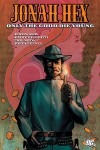
Jonah Hex: Counting Corpses (Cover updated, since we have the final art now. Everything else is good, just waiting on the CBDB link until this one is complete.)

Jonah Hex: No Way Back (Complete!)

The Enemy Ace Archives Vol. 1 (Complete!)

The Enemy Ace Archives Vol. 2 (Complete!)

Showcase Presents: Enemy Ace (Complete! Just in time for the review.)

Doc Savage: The Man Of Bronze (Cover updated, since we have the final art now. Complete! Hope to review this one tomorrow.)

We’re now totally complete with character tags, edition, publication info, etc up to Superman: The Action Comics Archives Vol. 1.

We may be inching along, but it’s great to see solid progress, even a little at a time.

Likewise, I’m now at 1650 Marvel books with full publication information in the offline database. That leaves about 400 more that I’ve got a title for at least, and probably a hundred or so that I don’t know about yet. I was able to get two hundred typed done last night, though after the review today my hand is cramping something terrible.

And speaking of reviews, now that you’ve heard my opinion on Enemy Ace if any of you guys want to weigh in on either of the Archives feel free. When it comes to books that repeat the same content, I don’t want to do them back to back.

I may come back to them later if I end up buying them.

I wonder how many words I’ve typed on this website? Certainly more than a novel, considering the reviews tend to be about 1000-1500. Huh.

Want to stay up to date? Click here to subscribe to updates by RSS!
You can also sign up to get updates by Email!
By | Thursday, December 16, 2010 | 11:20 pm | 5 Comments | Blog > Reviews
Find This Book At:
Amazon (Softcover)
Half.com (Softcover)
Ebay (Search by Title)
Ebay (ISBN/Softcover)
View our database entry
Includes Issues:Our Army at War 151, 153, 155; Showcase 57-58; Star-Spangled War Stories 138-152, 158, 181-183, 200; Detective Comics 404; Men at War 1-3, 8-10, 12-14, 19-20; The Unknown Soldier 252-253, 260-261, 265-267; DC Special 26
Issue Dates:February 1965 – August 1982
Creators:
, , , , , , , , , , , , , , , , , , , , , ,

This review contains light spoilers. Skip To The Verdict? »

DC’s War Comics were usually a bit darker than their Bronze Age Westerns.

While published at the same time, those 70s cowboys took a more nonchalant or even slapstick approach to killing.

The soldiers were much more conflicted, representing their roles in larger, harder to understand conflicts – fighting men in much the same situation as them, often innocents trained to kill (instead of hunting down murderers in the wild deserts.)

Perhaps the most conflicted of all was German Enemy Ace, Hans von Hammer, who flew the killer skies of World War I.

Showcase Presents: Enemy Ace collects the complete Silver and Bronze Age appearances of the Enemy Ace, from his introduction in Our Army At War 151 by writer Robert Kanigher and artist Joe Kubert through various other artists in Showcase, Star-Spangled War Stories, Men At War, The Unknown Soldier, DC Special and even an appearance with Batman in Detective Comics.

Except for one written and illustrated by Kubert, and the Batman story written by Denny O’Neil, Kanigher penned each issue, often also acting as editor for the magazine.

Neal Adams pencils Star Spangled 144 and Detective. Russ Heath has work in SSWS 152, Frank Thorne on 181-193. Men of War sees art by Ed Davis, Larry Hama, and Howard Chaykin. The Unknown Soldier co-features are penciled and inked by John Severin. A host of other creators have acted as inkers, letterers and editors.

Weighing in at over 550 pages, it’s a big book – about standard for the black and white Showcase Presents editions.

We are introduced to Hans von Hammer on page 7, the first words on the page a poetic observation of a successful kill – “Like a fragile sparrow, the blue and white winged Nieuport fluttered frantically under the lashing of my twin spandaus… until..”

The french flier goes up in flames, saluting his killer as he falls from the sky. The Enemy Ace introduces himself through dialogue internal and spoken (though to who, I’m not sure. He is up in the sky in a one man plane.)

This first issue introduces almost every memorable aspect of the book – Hammer has been trained to kill, so well, in fact, that his compatriots think him a merciless killing machine. Yet he respects his enemies and will only duel them with honor.

And despite his great fame, he is a very lonely man, only identifying with a black wolf he goes to meet after his flights. The men see him as insatiable, returning from a battle only to seek more bloodshed with his rifle  – but von Hammer only seeks to walk in the black forest with his only friend, another “born killer.”

He’s a very interesting character. First of all, it was a bold choice to create a German lead after WWII (even if his participation was in the earlier and slightly less horrific conflict.) It works, of course, because the desire here is to tell thrilling stories without overly glorifying war and death.

The Enemy Ace is also characteristic of a historical breed perhaps extinct, one who believes war can be fought with honor. I don’t know the true history of the World War I airmen, but perhaps it really did play out with duel-like rules, those with jammed guns and lack of ammunition being allowed to fly home and match their skills another day. In any case, Hammer himself is confronted by those representing a much more modern idea of war – that it’s simply to kill the enemy in any way possible.

What’s unfortunate is that the writing here, while carrying some interesting ideas, can also be extremely repetitive. The first 150 pages are so are the worst.

While the action varies a little bit, the dialogue and plot is almost exactly the same in every single story. Hans goes up in his plane, kills or crashes, talks about honor and how “the sky is the killer of us all,” and then goes to his black wolf, his only friend.

The dialogue is often repeated word for word and there are even panels of reused art. Much of the dialogue is very straightforward naming of planes and parts – engines, guns, etc. While it’s kind of interesting (and obviously something that a small boy in the sixties might be really into) the constant parade of italicized ship names tended to bore me – or lead to me giggling stupidly every time Hans flew about in his crimson fokker.

The slog through those first 150 pages took me 4 days of periodic reading.

It gets a bit better, because it seems that Kanigher was boring himself as much as me. To compensate, he introduces a parade of masked weirdos in the opposing planes. This freak of the week stuff is alright, but none of them really make sense, not that making sense has ever mattered much in a comicbook.

Regardless of the costume or weird insignia on the side of the plane, the conflicts play themselves out as you’d expect. At least now there’s a difference in dialogue and plot structure, so the next two hundred pages or so are more enjoyable, allowing me to read them in an afternoon.

Of the various opposing fliers, only The Hangman and The Balloon Buster are particularly memorable as characters. The Hangman, despite his appearance, represents a figure much like Hammer, fighting with honor on the French side. The Balloon Buster is an American, attacking with our characteristic recklessness and cowboy attitude.

Both are enticing challenges for the Hammer of Hell. There are also teams of skeleton fliers, pilots with warthog helmets, and a fully armored knight.

Still, Hammer is the ace, and the end result tends to be predictable for these airmen – fiery death.

The rest of the book I finished in one sitting. The latter issues flow nicer, while still leaning heavily on catchphrases and the strength of illustrated aerial combat, the Enemy Ace has the opportunity to see some action on the ground and interact with people directly. It’s a nice change of pace.

The stories are usually centered around Von Hammer’s training and overseeing of young pilots (who drop like flies) and sometimes his avenging of their loss. There are periodic twists, like his capture, trek through enemy territory, or (oddly) decision to bring a small puppy into battle.

The book is more a character study than a progression of plot. When it rides more on interaction it’s quite good, but reliance on catchphrases can get irritating. While I found it boring at times, perhaps it’s a metaphor for the monotony of war.

As for the art, that’s the saving grace of the first segment. Kubert’s well crafted planes loop about in explosive dogfights, showing off an impressive array of viewpoints for the action. It’s not Kubert’s best work, lacking the personal emotion of his best Tor projects, but it’s still good.

I couldn’t help missing color a bit, as I think the red of Hammer’s plane would have really livened up these scenes, plus many of the explosions lacked oomph without bright saturation. But the linework is still strong and clear, easily followed.

Personalizing air combat is a bit tricky, but the creators show enough panels from the cockpit view to follow our Enemy Ace’s emotions. When a wider field is shown, the pilots often have inset headshots.

I thought it might start to feel a little schmaltzy, but I found myself enjoying the technique more as the book went on instead of tiring of it. Von Hammer’s alternatively sad and determined eyes bring a lot to the work.

While Kubert is undoubtedly a master of the medium, not all of the book is his work. Of the other artists, Howard Chaykin‘s work was the most jarring change. His bold, dark shapes lend drama to some of the characters, but also created confusion during battle. His planes aren’t as well formed and may suffer the most from lack of color.

The switch to John Severin was most welcome. His Ace seems a bit sadder, perhaps, though well rendered. But it’s the aerial scenes where his subtle line and hatchwork really shines.

The lovingly rendered planes fly through bright clouds, seeming to glow in the sun. Dogfights take place above faintly suggested farmland or crater-marked battlefields.

While I like Kubert’s depiction of the characters the most, Severin’s planes steal the show.

It’s strange that scenes of violent death can be beautiful, but I suppose that’s what art does – along with the viewpoint of plane against sky, instead of men in ditches.

With any large volume, it’s easier to give general impressions instead of specific critiques. There is a lot of exemplary work here, but it can also be very very repetitious.

A lot of this is due to the era these comics come from. They just weren’t designed to be bound in one volume and it’s doubtful Kanigher even thought early issues would be remembered by the time the kids went on to the next one.

If you’re at all interested in War Stories, it’s worth picking this volume up. You just might want to leave it in the bathroom or read it on your smoke breaks. I don’t advise trying to finish it in a sitting.

Even during the most boring parts and despite the dark depictions of aerial dogfights, Showcase Presents: Enemy Ace made me want to fly.

Verdict:
3.5 out of 5. Some great stories, some not so great stories, and a lot of catch phrase spouting redundancy, all wrapped around one of the most interesting characters in war comics.

The art is excellent and most of the volume is quite enjoyable, but those first 150 pages really dragged it down. As a historical collection, this is an excellent value for 550 pages of comics.

If you’re geeky about old planes, you will love this comic more than anything.

As far as my personal enjoyment, I was bored too often to rate it higher.

Essential Continuity:
Enemy Ace shows up in a few other places, but isn’t really a large player in the DC Universe. This book is essential for the character, but not much else.

Read first:
No prior reading is required, but the Sgt. Rock comics were running a couple years before this one if you’re interested in more war stories.

Read next:
If you’d like to see these stories in color, many of them have been printed in The Enemy Ace Archives Vol. 1 and The Enemy Ace Archives Vol. 2.

There have been two modern stories in book format. Enemy Ace: War In Heaven collects a Garth Ennis miniseries. Enemy Ace: War Idyll is an original graphic novel taking place in the 60s.

This might sound a little crazy, but I couldn’t stop thinking about a flight combat videogame while I was reading. If you like that kind of game, check out Sky Gunner for the PS2. It’s about halfway between this book and a Miyazaki film.

You may also be interested in other comics on the DC War Stories list.

As far as reviewing our way through the DC Universe Reading Order goes, before WWI we were involved in the DC Westerns. Next up is the pulp era starting with Doc Savage: The Man Of Bronze.

« Back to the top?

Join the forum discussion on this post
Want to stay up to date? Click here to subscribe to updates by RSS!
You can also sign up to get updates by Email!
Page 20 of 115« First...10...1819202122...30405060...Last »